


 Spa
 Zho
 Por
 Slo

What happens when things don’t stay ‘shiny side up’?
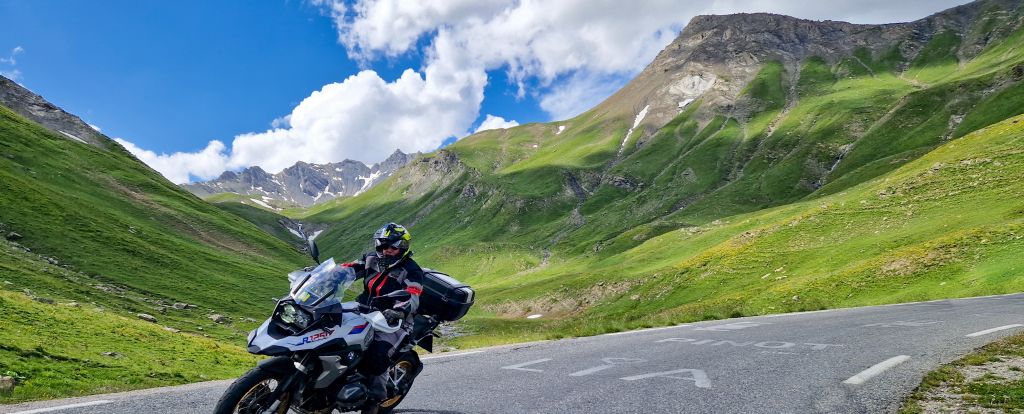
My time for this inevitable event happened on AMT’s South of Rome and Sicily guided tour in October 2024. I was launched over the handlebars of my BMW F 750 GS when both wheels slid out from under me on a muddy mountainous road in Sicily.
I learnt firsthand then that AMT has comprehensive plans to activate in the event of a crash such as mine. I knew instantly that I was in great hands as our guides, Jure and Mitja, took care of my every need, both physical and emotional. So let me use my unfortunate event to bring to light AMT’s comprehensive plans to handle the bad things that are bound to happen sometimes.
How AMT prepares for the bad times
For 20 years, AMT has guided hundreds of riders on tours each summer, so I know I wasn’t their first client to crash. AMT’s Martina Malovrh, who some AMT customers may have connected with via email, was reluctant at first to approve my pitch to write this blog. We don’t really want to scare people off by talking about crashes, she said. But she approved my idea once I pointed out to her that all motorcyclists — the realistic ones, at least — are always thinking about a crash that may be down the road for them. Plus, I said, outlining AMT’s extensive plans to handle these rare events would be reassuring to people considering whether to take a tour.
Martina confirmed that crashes or serious health emergencies are rare, but that AMT takes preparing for these events very seriously. Much of the information below about AMT’s safety procedures come from email correspondence between Martina and me.
Pre-season preparations
Each year, before the start of the riding season, AMT guides meet to review and analyze all crashes and medical incidents from the previous season. This ensures they are well-prepared to act in the best interest of injured riders. Guides review the comprehensive accident protocols AMT has established to provide clear guidance for the guides in handling emergencies effectively. Additionally, guides review a formal protocol for handling fatalities to be followed in the event of such an occurrence.
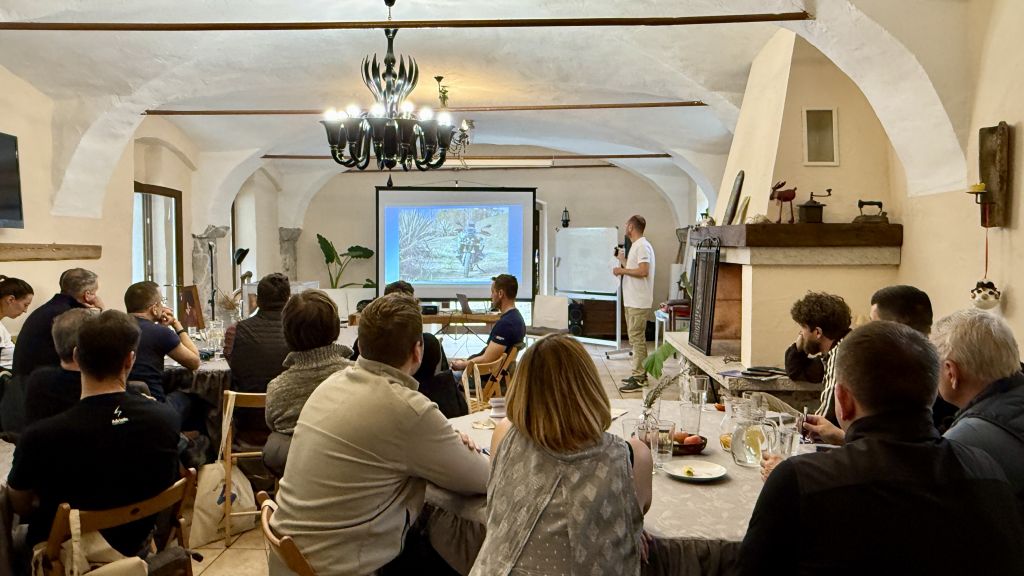 The AMT Annual Preseason Seminar focuses on reviewing and analyzing protocols, and discussing past events to improve guides' responses during accidents.
Guides have extensive training
All guides have successfully completed a first aid course and undergo annual refresher training on First Aid Emergency Protocols with a certified professional before the start of each season. Part of this training includes learning how to recognize signs of serious health issues such as heart attack, stroke, heat exhaustion, and hypothermia. Guides are trained in administering CPR.
Each guide is qualified to administer SPAR (Standardized Patient Assessment Response). A fully equipped first aid kit is carried on every guide’s motorcycle, and an additional kit, along with multiple bandages, is available in the support van.
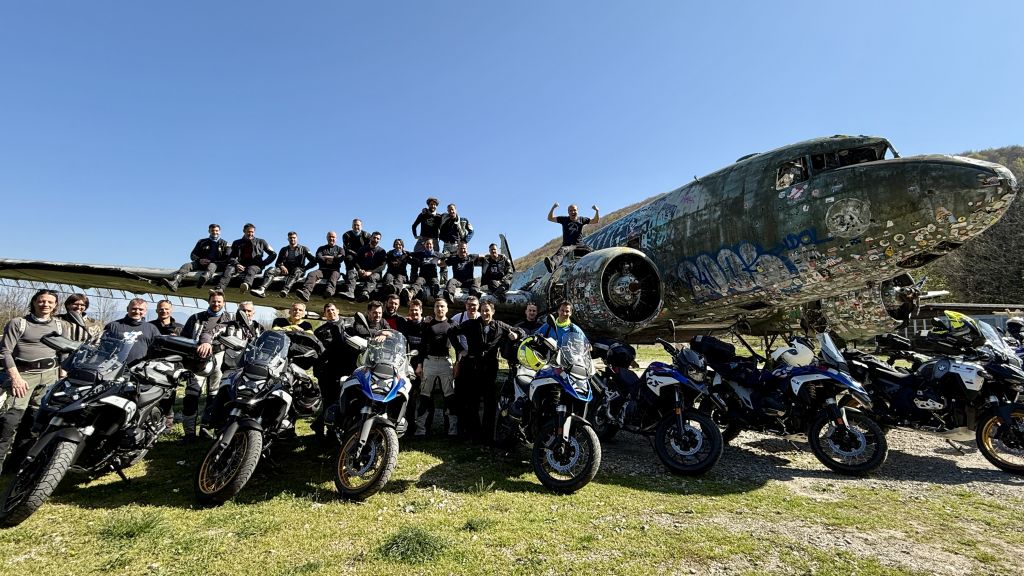 AMT’s team of guides during the annual 'Introductory Ride to the Season,' where they get acquainted with new motorcycle models and practice the Corner Marking System and road safety.
Crash site management skills
In the event of a crash, a guide will secure the area, initiate the SPAR routine, administer first aid if necessary, and contact emergency services if necessary. Additionally, the guide ensures the injured rider’s well-being by providing protection from environmental factors such as sun, rain, and cold, and by positioning them appropriately in case of unconsciousness.
I can attest that after my crash, Mitja was quickly at my side, assessing my situation. And the first thing we discussed was whether I had lost consciousness (I had not).
This was a low-speed crash, for which I was grateful. I was also grateful that my head-to-toe riding gear spared me from serious injury. However, I knew that both of my shoulders had suffered soft tissue damage, but thankfully no broken bones.
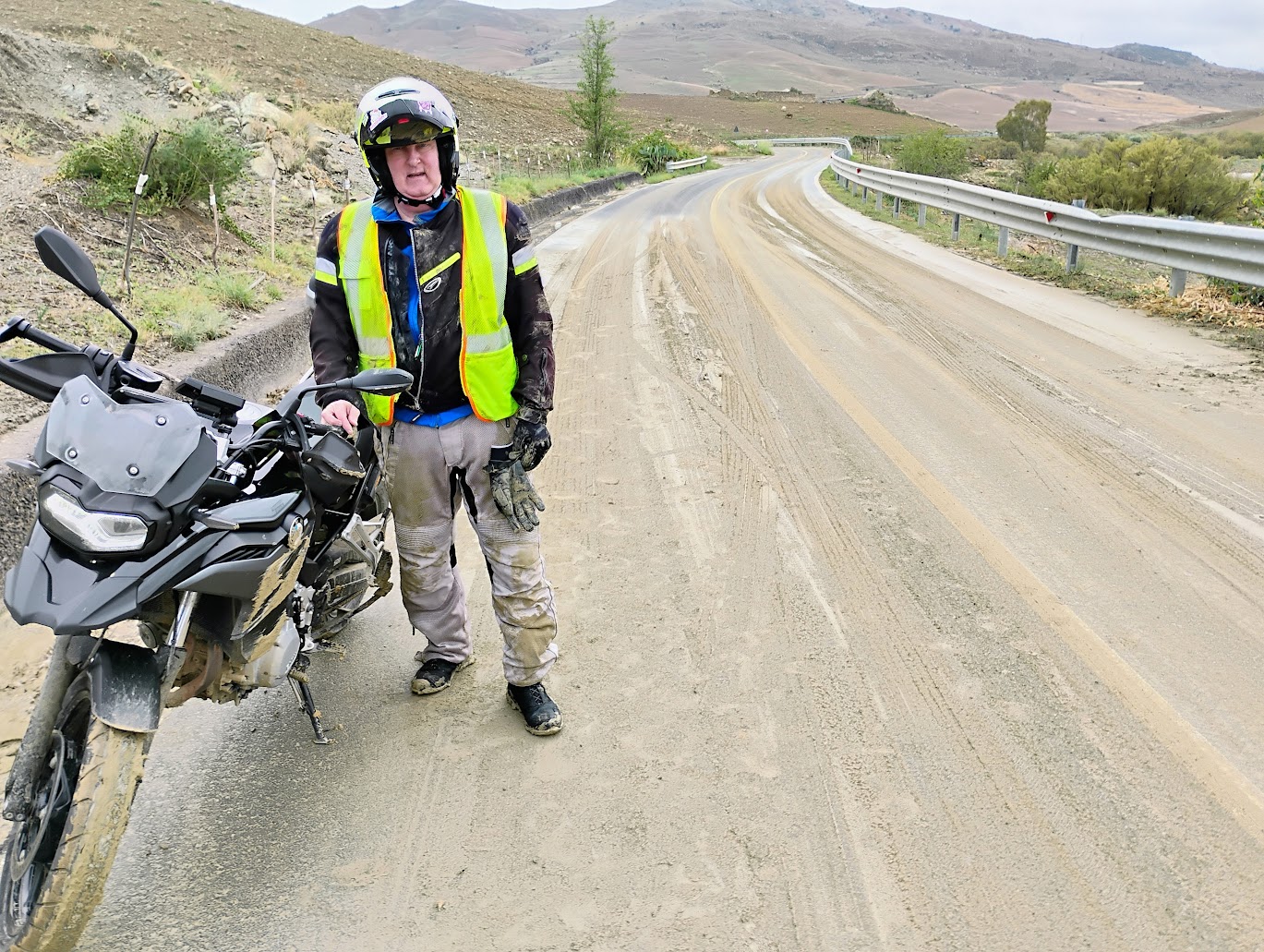 The site of the author's accident on a muddy road in Sicily.
Had my injuries been more serious, AMT protocols would have called for Jure, the van guide, to accompany me to the hospital and remain with me there to assess whether I could be discharged and continue the tour in the van or if I needed need to stay for further medical care. He would also help me contact my wife, if I couldn’t do so.
In my case, I determined that I didn’t need to see a doctor. But to keep me from further injuring my shoulders, I decided not to ride my BMW for the rest of the day. And so, I rode with Jure in the AMT van to that evening’s hotel.
At no time did I feeI pressure to get back on my BMW and finish out the tour. Jure and Mitja said I could ride each day in the van for the rest of the tour if I wanted. They also said that if I wanted to return home earlier than planned, AMT would help me make those arrangements.
As it turned out I needed just one extra day of rest, so I spent the next day in the van with Jure, and then got back on my thoroughly inspected and cleaned up BMW to ride out the last week of the tour. Yay!
For injured riders requiring hospitalization and needing help connecting with emergency contacts back home, AMT protocols call for the van guide to do that on the rider’s behalf. The guide will also deliver the rider’s luggage to the hospital and arrange for the retrieval of the damaged motorcycle.
Logistical training, too
Martina also emphasized that AMT guides are highly trained both theoretically and practically, ensuring they can effectively manage crashes and emergency health situations.
They are equipped to provide immediate care to the injured while also coordinating with all relevant parties, including law enforcement, emergency services, hospitals, and the individual’s emergency contacts back home.
Additionally, they are well-prepared to handle the logistical aspects of the tour following an incident, ensuring minimal disruption for other riders who wish to continue their journey.
AMT protocols clearly define the respective roles for each guide, which ensures they execute their responsibilities flawlessly and thus bring about the best possible outcome for everyone involved.
Tour with confidence
Motorcycling is inherently dangerous. Every savvy rider knows that crashes are almost guaranteed to happen sometime, sooner or later. I have now taken three guided AMT tours. But before that, I took maybe a half dozen solo, self-guided motorcycle trips in Europe on rented machines.
But after experiencing my first crash — after about 30 years of riding — I’m glad it took place on a guided tour, where I had the extensive support I needed to get me back on track.
So, trust AMT to have the best safety protocols in place to keep their riders safe, but also to have the best procedures to deal with the bad situations that we all hope will never happen, but of course, sometimes do.
Keep the shiny side up!
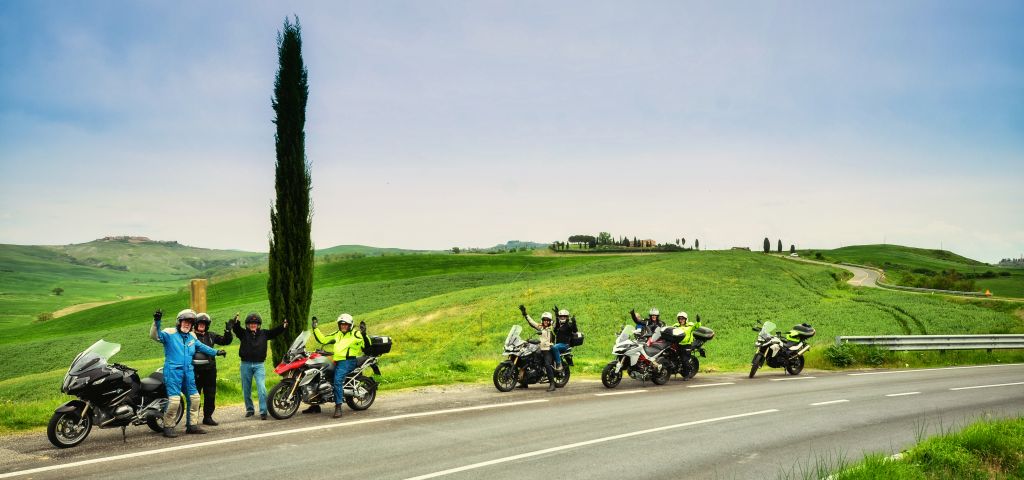 Happy Riders somewhere in Tuscany; Tuscany Sardinia Corsica Tour by AMT.
BACK TO BLOG